OXFORD OPTRONIX
X
f
in

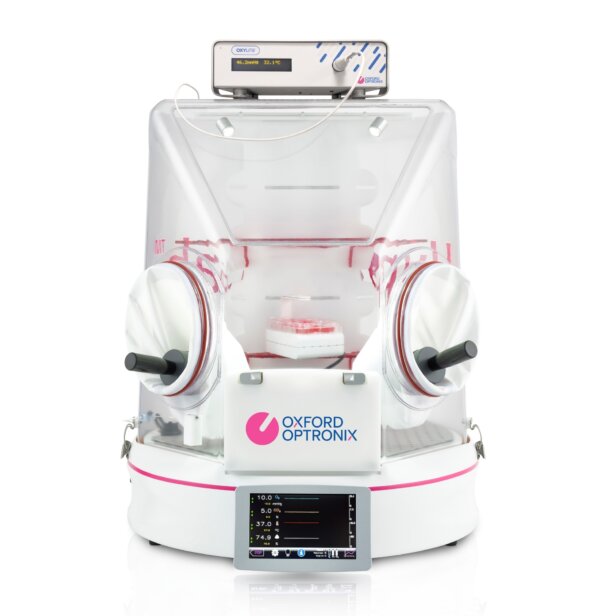
HypoxyLab™ Hypoxia chamber bench-top physiological oxygen incubator and workstation

Physiology, Not Approximation

1. Bold Value Proposition
HypoxyLab Bench-top Workstation

Your incubator says 1% oxygen. Your cells are experiencing something else entirely.

2. PAS

Every time you open the door, every percentage-based reading, every unverified assumption compounds into data you can't fully defend.

HypoxyLab controls the oxygen your cells actually see, in mmHg not approximations, so your results reflect biology and not equipment limitation.

We usually respond within one business day (or sooner!)

3. CTA
3. Trust Signals
30+ years
Experience & Innovation
200+ institutions
Scientific Partnerships
30+ countries
Global Reach

Some of our worldwide clients

8. Why choose us

Authentic physoxia in a bench-top hypoxia incubator/workstation.

Compact, yet fully featured

So it fits on a standard lab bench without sacrificing the performance of a full-size workstation.

Mimics the in vivo cellular oxygen environment

So your cells experience the conditions they would in living tissue, not a laboratory approximation.

Regulated using oxygen partial pressure

For true hypoxia/physoxia, giving you results that are reproducible across any lab, anywhere in the world.

Proprietary gas controller

With industry-leading gas consumption, keeping nitrogen running costs significantly lower without any compromise on precision.

HEPA filtration built-in

So cultures stay protected from contamination without additional equipment or setup.

Ergonomic design

Comfortable enough for extended sessions and reducing the risk of shortcuts that compromise your environment.

Smart sample transfer hatch

Eliminates requirement for air lock, so you can transfer samples in seconds without disrupting internal oxygen levels.

Intuitive touch-screen interface

Simple operation, so you spend less time learning the system and more time on your research.

Supports OxyLite™ integration

For in situ dissolved oxygen measurements, verifying what your cells actually experience, not just atmosphere readings.

2-year manufacturer's warranty

Giving you two years of manufacturer-backed confidence as standard.

All-inclusive price

No costly options or extras required for operation, so you have everything you need from day one.

6. Third party reviews

Tell me more..

We usually respond within one business day (or sooner!)

"Hypoxylab is reliable and user friendly"

Kendall Torres

Medical University of South Carolina

"Very good equipment"

Martin Murmann

Technical University of Denmark

"Smoothly doing hypoxia experiments with HypoxyLab"

Madelon de Jong

University of Oxford

"Effective and affordable equipment that gets the work done"

Poh Soo Lee

Technische Universität Dresden

"Easy-to-use hypoxic chamber"

Antje Güttler

MLU Halle-Wittenberg

"Great addition to our lab"

Despoina Eleftheriadou

University College London

"Easy-to-use, compact hypoxia station..."

Rafael Bayarri-Olmos

Rigshospitalet, Copenhagen

"HypoxyLab is an inherent part of our setup..."

Oliver Thews

University of Halle (Saale), Germany

"It's very easy to use, making it straightforward to achieve accuracy."

Dr Dan Peet

University of Adelaide

"The new design offers so much more space..."

Prof. Oliver Thews

Martin-Luther University, Halle-Wittenberg

5. Images

System in Detail

System Control Interface

Advanced Bench-top Physiological Workstation

+ View More

Experience the Technology

6. Video

Watch the HypoxyLab in action: Precision control meets ergonomic efficiency.

7. Pricing

Pricing

Pricing is based on system configuration, application requirements, and support needs.

Most customers purchase a tailored solution aligned to their research model and funding structure.

Your system configuration typically includes:

  • Core monitoring instrumentation matched to your application
  • Probes and sensors appropriate for your experimental model
  • Software for real time data capture and analysis
  • Installation guidance and technical documentation
  • Ongoing technical support from an experienced specialist team
7. Pricing
8. Procurement Process

Hypoxia Chamber Procurement Process

From initial enquiry through to an installed system in your lab, here is how a HypoxyLab™ purchase typically unfolds.

01

Application Scoping

A short conversation about your application, target oxygen range and workflow lets us prepare a tailored quote for your lab.

02

Procurement Support

We guide your team through specifications, lead times, shipping terms and any institutional documentation needed to move the purchase forward.

03

Delivery & Installation

From confirmed order, your HypoxyLab™ is typically delivered within 2 to 4 weeks, with full support through installation and beyond.

Discuss Your Requirements

We usually respond within one business day (or sooner!)

8. Procurement Process

An introduction to HypoxyLab

PDF Product Flyer for HypoxyLab™

(1877kb)

In the field of tissue culture, there is a rapidly growing appreciation that a physiological cellular oxygen environment is essential for the analysis of cellular processes with respect to function and metabolism.

Rising to this challenge, Oxford Optronix has developed the HypoxyLab™ — a fully-featured, ergonomically engineered and easy to use normoxia/hypoxia workstation that provides a HEPA-filtered environment in which oxygen, carbon dioxide, temperature and humidity can be precisely controlled.

In short, HypoxyLab™ is a compact hypoxia workstation and incubator for everyday use, suitable for applications including:

  • Cancer, radiation and apoptosis cell biology
  • Stem cell research
  • Neurosciences research
  • Human virology research
  • Multidisciplinary drug development and proteomics
8. Overview / Applications
Discuss Your Requirements

We usually respond within one business day (or sooner!)

True physiological oxygen (physoxia)

As every scientist knows, it's the partial pressure of oxygen that reflects the oxygen that cells actually 'see'. The partial pressure of oxygen varies not only with oxygen concentration in the atmosphere, but also with altitude and prevailing weather conditions. For this reason we believe it is insufficient to express hypoxia in terms of a barometrically uncompensated percent oxygen concentration alone.

HypoxyLab is therefore the world's first and only hypoxia workstation that directly regulates its environment using the partial pressure of oxygen, expressed in absolute units of mmHg or kPa, making it insensitive to meteorological conditions or the altitude of the laboratory. This scientifically rigorous approach provides researchers the ability to replicate physiological oxygen in vitro, at the highest levels of accuracy and reproducibility.

See our related article: "The importance of oxygen partial pressure in cell culture"

Lightweight cover & ergonomic design to suit any environment

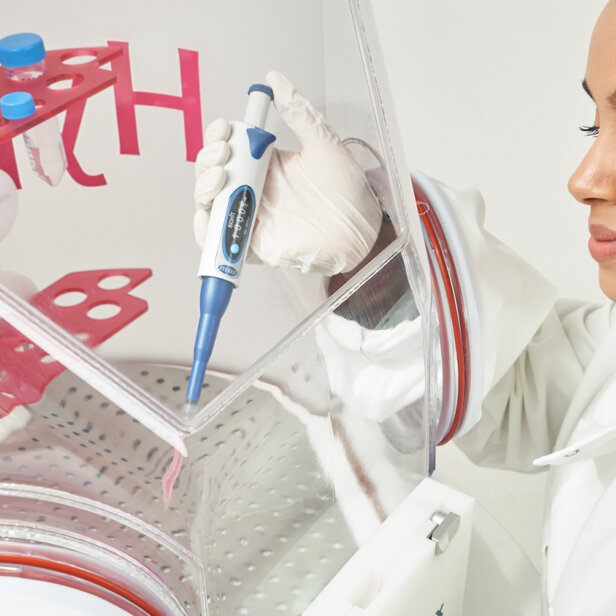
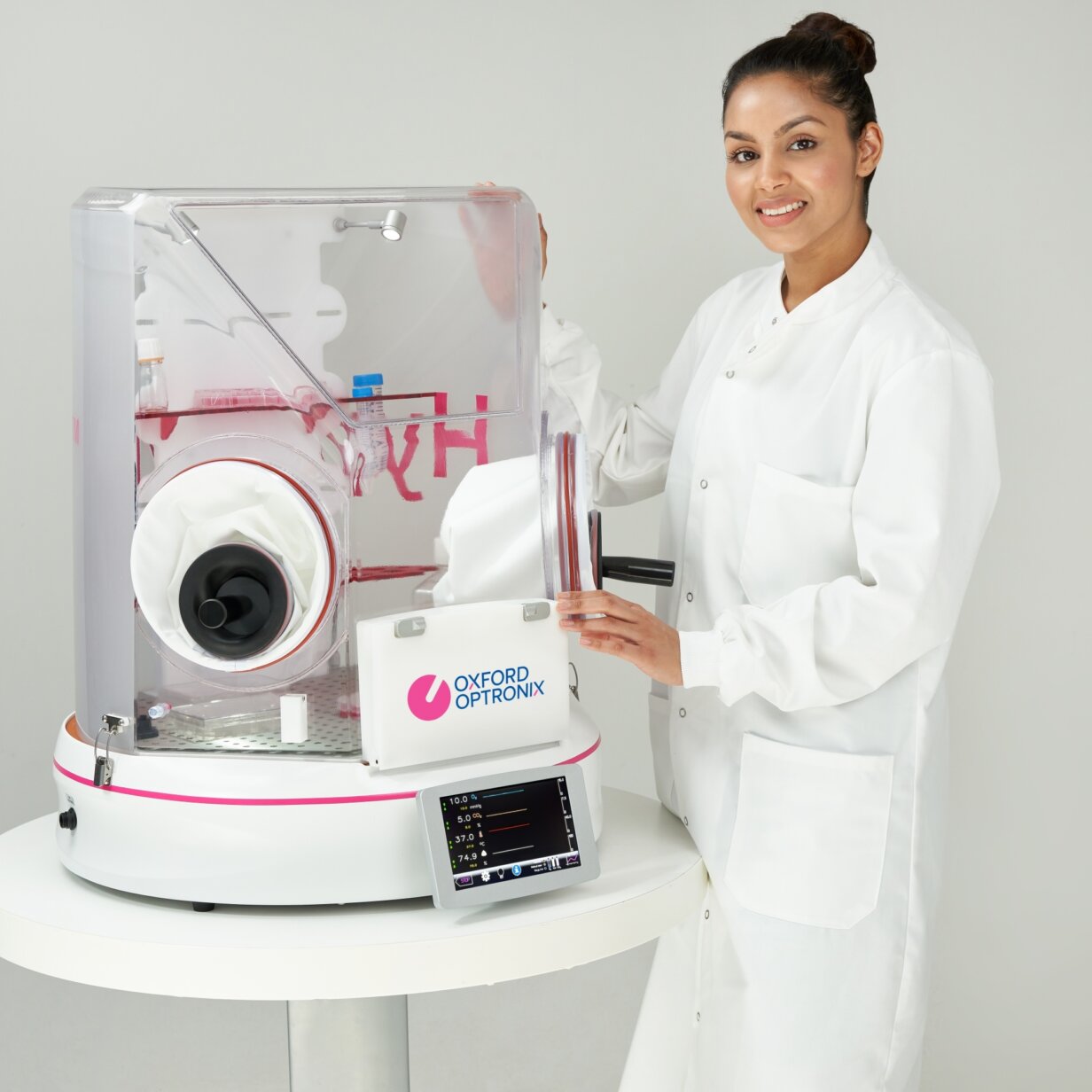
HypoxyLab's lightweight and durable cover can be easily removed. This not only allows for easy loading of media and consumables but makes routine cleaning and disinfecting of the workstation a practical reality. Its ergonomic design ensures natural, relaxed operation, with an angled vision panel combined with adjustable LED illumination that provide excellent visibility.

Hypoxia chamber with proprietary gas control technology

HypoxyLab uses purpose-designed gas control hardware and an advanced Model Predictive Control (MPC) gas control algorithm, developed in-house, to create and maintain a fully humidified, highly stable oxygen-controlled environment for tissue culture. It responds rapidly to single or multiple setpoint changes, with minimal or zero overshoot characteristics, all while consuming surprisingly little nitrogen gas.

Hypoxia chamber offering in vitro dissolved oxygen from media & cultures

Dissolved oxygen can optionally be sampled directly and continuously from cell cultures (e.g. from the cell monolayer itself) and/or from media being conditioned within the HypoxyLab, via a miniature optical sensor that can be fed into the chamber through a dedicated, sealable side-gland. Oxygen readings (in mmHg) can be read from the OxyLite™ monitor or can be displayed and recorded by the HypoxyLab itself.

OxyLite™ monitor required.

The OxyLite monitor add-on allows for dissolved oxygen measurements directly from media and cell cultures within the chamber.

Easy-entry hatch system

HypoxyLab's 'letterbox' hatch entry system affords quick and easy transfer of cell plates and accessories into or out of the chamber without the need for an air lock or isolation hatch. HypoxyLab senses when items are passed through the hatch, temporarily generating a slight over-pressure to minimise ingress of external atmosphere. This immediate response ensures that oxygen concentrations within the chamber remain stable even when transferring items directly into or out of the chamber.

No transfer hatch required! Pass samples through the letterbox without upsetting the internal environment.

See our dedicated article: "The HypoxyLab easy-entry system"

Contamination control

HypoxyLab includes a built-in UV source within the water reservoir and a user replaceable HEPA filter that continuously scrubs the chamber atmosphere, ensuring that cultures and media are protected from contamination.

Replaceable HEPA filter.

Touchscreen information display

Chamber oxygen, CO₂, humidity and temperature are set and controlled from the integrated touchscreen, which simultaneously displays the current real-time levels of these parameters in both digital and trace formats.

  • The Standby screen, providing access to numerous functions and features
  • Operating mode displays setpoints and live values in numerical and trace formats for each parameter
  • The new programmable profile feature supports automated oxygen profiles

Cable thru-ports built in

In support of powered devices deployed within the HypoxyLab (digital microscopes, shakers, micro-centrifuges, etc.) the HypoxyLab features two dedicated thru-ports for the transfer of power and data cables, or tubing up to 7 mm in diameter through the chamber wall without compromising the internal environment. The HypoxyLab ships with a pair of blanking glands pre-fitted.

The optional thru-port gland kit is described here

A choice of adapters support cables between 3 and 7 mm in diameter.

Waste / vacuum thru-port built in

A 6 mm stainless steel pass-thru waste port is also built into the chamber wall as standard, intended for the aspiration of media, supernatants etc. from within the chamber via an externally connected vacuum pump.

A built-in 6 mm vacuum thru-port is standard.

Data logging

Internal oxygen, CO₂, temperature and humidity parameters are continuously recorded onto internal flash memory and can be exported to a USB flash drive. Data files can subsequently be analysed and played back using the free LabChart® Reader by ADInstruments.

Cost of ownership advantage

HypoxyLab's compact design and advanced gas control algorithms ensure rapid and ultra-smooth transitions to setpoints, with industry-leading gas consumption performance. Together with service-free sensors and a user changeable HEPA filter, these characteristics minimise the long term cost of ownership.

2-year product warranty

Our confidence in the reliability of the HypoxyLab is reflected in our comprehensive manufacturer's warranty, covering defects in materials and workmanship for a period of 2 years from the date of delivery. Extended warranty packages, tied into preventative maintenance servicing are also available.

Unmatched technical support

Technical and application support is both comprehensive and free throughout the lifetime of our products. It is provided by highly experienced support staff who pride themselves in providing personal and responsive assistance via on-site visits, video calls, or email and will 'go the extra mile' to ensure that our users can extract the very best value and opportunity from our products.

9. Key Features
Discuss Your Requirements

We usually respond within one business day (or sooner!)

9a. Comparison Table

How HypoxyLab™ Compares

A side-by-side look at how HypoxyLab™ stacks up against leading alternatives on the features that matter most to day-to-day hypoxia research.

Feature
HypoxyLab™
Oxford Optronix
Competitor A
Leading alternative
Competitor B
Leading alternative
Oxygen control mode Partial pressure (mmHg) and % % only % only
Integrated HEPA filtration
Standard
Optional add-on Not specified
Active humidity control Active nebuliser, up to 85% at 37°C Active nebuliser, up to 85% at 37°C Up to 80%
Sample transfer Smart letter-box hatch (standard) Optional interlock add-on Optional interlock add-on
Live cell probing gland
(for in-chamber O₂ measurement via OxyLite™)
Yes
Touchscreen control Full-colour touchscreen Monochrome Limited
Working volume 130 L 180 L 180 L
Bench footprint 0.30 m² 0.53 m² 0.57 m²
System weight 28 kg 59 kg 77 kg
24-month warranty
Standard
Conditional on annual servicing Not stated

The easy-entry hatch: designed for workflow, not compromise

Some researchers wonder whether a hatch-based access model trades control for convenience. In practice, the opposite tends to be true. A traditional airlock often introduces enough friction that users batch movements, interrupt established workflows, or handle samples in less controlled ways to avoid the overhead. The letter-box hatch removes that pressure, so routine transfers happen quickly and predictably.

There will always be a brief atmospheric disturbance during access, but oxygen conditions within the culture media respond far more slowly than the chamber headspace. Over the short interval of a typical transfer, that transient at the chamber level is unlikely to translate into a meaningful shift in cellular oxygenation or biology.

A note on use: the hatch is a transfer feature, not a holding area. Samples left inside the hatch rather than moved fully into the working chamber would not experience the full controlled environment, and extended dwell times there could affect cell viability. Used as intended, the hatch supports quick, convenient access without the burden of a traditional airlock.

Right-sized for the way labs actually work

For many labs, a 130 L chamber is not a downsize but a smarter fit. A more compact working volume reaches stable conditions faster, uses substantially less gas to maintain, and is more practical to run on a day-to-day basis. Teams get into experiments sooner and spend less keeping them going.

There is also a strong case for using the chamber size you actually need. Rather than investing in one oversized workstation and running everything under a single set of conditions, two HypoxyLab™ systems can run two different oxygen environments in parallel. For many groups that is a far more efficient use of bench space, gas supply and budget than a single large chamber.

HypoxyLab™ is not a reduced-capacity alternative. It is a purpose-built platform for labs that want precise environmental control without the cost, gas consumption and footprint of a much larger system.

Verification that reflects the biology

Some hypoxia chambers offer a secondary atmospheric monitor as a way to cross-check headspace conditions. HypoxyLab™ takes a different approach. A built-in sensor gland accepts our optional OxyLite™ fibre-optic probes, allowing teams to measure dissolved oxygen directly within the culture media or at the level of the cells themselves.

For most biological work, what really matters is not the chamber headspace reading but the oxygenation the cells are actually experiencing. OxyLite™ probing reads exactly there. That makes it more than a verification tool. It is a more biologically meaningful measurement, and one that can be tracked continuously throughout an experiment rather than confirmed at a single point.

A secondary chamber monitor tells you what the workstation is doing. OxyLite™ tells you what the cells are actually experiencing. For most labs, that is the measurement that matters.

Where HypoxyLab™ fits in the landscape

At one end of the spectrum, simple hypoxia incubators maintain conditions but offer little support for actively working with cells. At the other, fully integrated gloved-arm workstations deliver the strictest possible handling control, which can be the right answer for the most demanding continuous-culture protocols where samples remain under maintained conditions for weeks at a time.

HypoxyLab™ sits deliberately in between. It supports both short and long-term studies, gives precise environmental control during routine experiments, and offers the ergonomics, footprint and cost profile that suit most laboratory workflows. For groups already running a gloved-arm workstation for their most rigorous work, HypoxyLab™ is often the complementary platform for everything else.

HypoxyLab™ is the right answer for the wide majority of hypoxia work. Where a different format would genuinely serve a particular protocol better, we will say so.

Built to work with cells, not just incubate them

HypoxyLab™ is designed not just to maintain conditions, but to let your team actively work with samples inside a precisely controlled environment. Partial pressure control, integrated HEPA filtration and active humidification deliver the stability and reproducibility that simpler incubator-style approaches cannot match.

9a. Comparison Table
Discuss Your Requirements

We usually respond within one business day (or sooner!)

9b. Service & Support

Service & Long-Term Support

The HypoxyLab™ is built to support multi-year research programmes, and our service offering is structured to keep it running reliably for the full lifetime of the system.

Recommended service interval
Every 2 Years

A two-yearly schedule keeps maintenance proportionate to what the system actually needs, predictable for your team to plan around, and aligned with how a working laboratory operates.

What preventative maintenance covers

  • Inspection and replacement of main wear items
  • Checks of core functions and sensor calibration
  • Cleaning of relevant internal components
  • Firmware and software updates where required

Service outside the UK

For customers based outside the UK, service is delivered through a wider network of regional partners and distributors. Routine maintenance does not depend on shipping the system back to Oxford, so procurement teams can plan with confidence regardless of where the lab is located.

Service is structured to support customers over the long term, not just at the point of installation. If you would like the full service documentation for your team or institution to review, just ask.

Discuss Your Requirements

We usually respond within one business day (or sooner!)

9b. Service & Support

"The HypoxyLab has been a great addition to our laboratory. It's very easy to use, making it straightforward to achieve accurate and consistent levels of hypoxia, has a small footprint and uses less gas than most other workstations."

Dr Dan Peet

Associate Professor at the School of Biological Sciences, The University of Adelaide, Australia

"Working with the HypoxyLab is great. It is reliable, easy to use and requires quite little gas (as compared to larger chambers). Especially the possibility of using pre-defined oxygenation profiles is an important additional benefit. During these profiles the composition of the gas is changed rapidly and the actual gas fractions are well documented continuously. This feature allows interesting hypoxia/re-oxygenation experiments."

Prof. Oliver Thews

Faculty of Medicine, Martin-Luther-University, Halle-Wittenberg, Germany

"The experience with the HypoxyLab has been great. Its footprint is very small, a distinct advantage. The quality of technical support/service available is unmatched. Issues have been addressed by Oxford Optronix very swiftly and accurately along with a very personalised service."

Dr. Anurag Kulkarni

Department of Medicine, Imperial College, London, UK

10. Testimonials & Clients
Discuss Your Requirements

We usually respond within one business day (or sooner!)

Cells react in different ways both metabolically and morphologically depending on the environmental factors maintaining and interacting with them.

In tissue culture, faithfully reproducing the in vivo cellular environment is vital for meaningful analysis of both cell metabolism and cell function.

Cells in vivo experience oxygen concentrations in the range of 5 – 80 mmHg (approx. 0.5 – 10% oxygen), depending on the tissue type. Yet in vitro cell biology is typically performed in incubators in which cells are exposed to atmospheric levels of oxygen (21%), a 'hyperoxic' state for most cell types. In other words, the oxygen concentration typically encountered by cells in traditional incubators is 2 - 20 times that experienced in living tissues!

Maintaining cells in such an oxygen-rich environment can have profound implications on cell metabolism, as illustrated by the large body of scientific evidence surrounding the hypoxia-inducible factor (HIF) pathways.

The HypoxyLab™ reproduces physiological conditions in cell-based research by delivering a contamination-free tissue culture environment that offers precise control of oxygen, CO₂, temperature, and humidity. And it does so in a remarkably compact and ergonomic form-factor that offers unmatched ease-of-use and economical gas consumption.

Meanwhile, it is the partial pressure of oxygen, not merely the proportion of oxygen in the environment (% oxygen) that cells in culture actually 'see'. HypoxyLab adopts this fundamental scientific principle and controls the chamber environment using the partial pressure of oxygen (pO₂) expressed in units of mmHg or kPa.

Since the partial pressure of oxygen varies not only with oxygen concentration but also with altitude and prevailing atmospheric pressure, this scientifically rigorous approach substantially enhances HypoxyLab's accuracy relative to other hypoxia chambers and workstations that rely on % oxygen concentration control alone.

Furthermore, this approach addresses a secondary shortcoming affecting traditional hypoxic/physoxic workstations in use today: reproducibility. By intrinsically correcting for both altitude and atmospheric pressure, data generated by one HypoxyLab user can always be directly compared to data generated by another HypoxyLab user, wherever they may be situated.

11. Rationale
Discuss Your Requirements

We usually respond within one business day (or sooner!)

Publications to date

Comprehensive PDF record of publications citing HypoxyLab™ (November 2025)

(135kb)

Recent citations of note

CD-44 targeted nanoparticles for combination therapy in an in vitro model of triple-negative breast cancer: Targeting the tumour inside out (2025). Gómez-Pastor S, Maugard A, et al., and Ruiz A.

Colloids Surf B Biointerfaces

Zygotic activin A is dispensable for the mouse preimplantation embryo development and for the derivation and pluripotency of embryonic stem cells (2025). Winek E, Wolińska-Nizioł L, et al., and Suwińska A.

Biol Reprod

Eplerenone, a mineralocorticoid receptor inhibitor, reduces cirrhosis associated changes of hepatocyte glucose and lipid metabolism (2024). Mohib MM, Rabe S, et al., and Schreier B.

Cell Commun Signal

Effect of hypoxia on Cystic Fibrosis Transmembrane conductance Regulator channel corrected by Elexacaftor/Tezacaftor/Ivacaftor (2024). Pascarel K, Colas J, et al., and Vandebrouck C.

Medical Research Archives

Arasimowicz-Jelonek, M, Floryszak-Wieczorek, J, Suarez, S et al., and Żywicki M (2023). Discovery of endogenous nitroxyl as a new redox player in Arabidopsis thaliana.

Nat Plant

12. Publications
Discuss Your Requirements

We usually respond within one business day (or sooner!)

HypoxyLab: an in-person overview

Effects of operating the easy-entry hatch under severe hypoxia

15. Videos
Discuss Your Requirements

We usually respond within one business day (or sooner!)

10. FAQ's

What is HypoxyLab™?

HypoxyLab is a cell culture incubator and hands-on workstation that accurately mimics and maintains true physiological oxygen conditions, as well as maintaining temperature, humidity and CO₂ conditions like any standard cell culture incubator.

How does HypoxyLab™ differ from other hypoxia workstations?

The HypoxyLab is sufficiently compact to fit on an ordinary laboratory bench, does not require the use of a dedicated transfer hatch, and comes fitted from the factory with built-in HEPA filtration, active humidification control, and an oxygen profiling feature. Additionally, the HypoxyLab regulates its oxygen environment using the partial pressure of oxygen (in mmHg) for the ultimate in scientifically rigorous oxygen control precision.

Why mmHg instead of % oxygen?

Using the partial pressure of oxygen to control the oxygen environment within HypoxyLab is simply the more scientifically rigorous thing to do! Since atmospheric (barometric) pressure changes with weather patterns, as well as with laboratory altitude, so does the oxygen concentration if it is merely maintained as a percentage thereof. Instead, HypoxyLab uses the partial pressure of oxygen to compensate for barometric pressure, ensuring that cells cultured within it 'experience' a consistent oxygen concentration whatever the weather and laboratory location. It ensures that data generated in HypoxyLab can be compared with and/or accurately reproduced by any other HypoxyLab user around the world.

How do I get items in and out of the system?

Cell culture plates, medium, pipettors and other objects can be moved in and out of the HypoxyLab via the simple to operate easy-entry hatch at the front, or can be placed in the chamber prior to the start of the experiment by simply lifting off the whole enclosure cover.

How does the entry hatch prevent ambient oxygen from entering the HypoxyLab™?

Opening of the hatch is accompanied by a transient internal overpressure generated by injecting nitrogen. This completely prevents ingress of external air in most scenarios. Only under extreme hypoxia, or where the hatch is opened for an unusually long time, will a small oxygen transient be observable. If so, this is eliminated within 2–3 minutes, ensuring no adverse effects on cell cultures.

Do I need to wear gloves to operate HypoxyLab?

There is no requirement per se for the operator to wear gloves, however, as with all cell culture work, wearing gloves represents good laboratory practice.

How can I clean the HypoxyLab™?

The enclosure cover is fully removable, exposing all internal surfaces for easy access. Hydrogen-peroxide-based surface cleaners are well suited to the HypoxyLab™ and effective against a broad range of laboratory contaminants. Diluted ethanol (typically around 70%) can also be used for routine surface cleaning, though prolonged or repeated contact with the acrylic and polycarbonate surfaces should be avoided as it can dull the finish over time. As always, please consult the product data sheet for any cleaner you intend to use, along with your own institutional guidelines.

Is a deeper decontamination option available?

Yes. For users who want hands-free, whole-chamber decontamination beyond routine surface cleaning, the optional MycoFog™ system delivers a controlled antimicrobial mist throughout the HypoxyLab™ and is designed specifically for compatibility with it.

What gases are required to operate HypoxyLab™?

HypoxyLab requires a source of 3 gases, namely 100% nitrogen, 100% CO₂, and synthetic air (typically 20% oxygen, balanced in nitrogen). If the oxygen profiling feature or rapid increases in internal oxygen are not a requirement, the HypoxyLab can optionally operate on just CO₂ and nitrogen alone. All gases should be laboratory grade (99.98% / 'N3.8' or better) and must be supplied at an inlet pressure of between 1 – 5 bar (15 – 70 PSI).

Is the user protected from substances inside the HypoxyLab™?

No. While the HypoxyLab features a built-in HEPA filter that continuously 'scrubs' the internal atmosphere, the system does vent externally. The HypoxyLab is NOT therefore a substitute for a fume cupboard or a biological safety cabinet.

How clean is the internal environment?

The built-in HEPA filtration scrubs the internal atmosphere within seconds of startup and achieves an environment equivalent to ISO 14644-1 Class 2 within a few minutes of power-up. Contamination control is built into the system by design rather than left to procedure alone, helping to protect cultures and media from the moment the chamber is in use.

Can I measure dissolved oxygen levels directly from within my cell cultures?

Yes. The HypoxyLab features a built-in gland that supports the introduction through the enclosure of our optional OxyLite™ fibre-optic dissolved oxygen sensors. These provide a continuous reading of dissolved oxygen in units of mmHg, directly from media or cell cultures within the chamber. For teams who want secondary verification of conditions, this is a more biologically meaningful measurement than a chamber-headspace cross-check, since it reflects what the cells themselves are experiencing.

Does the user need to be standing to operate the HypoxyLab™?

The system can be operated standing up or from a seated position. A height-adjustable stool is recommended for seated operation.

What is the typical nitrogen consumption rate of the HypoxyLab™?

Nitrogen consumption is extremely dependent on the conditions being maintained and the usage 'profile' being employed. Typically, a standard (50L) laboratory gas cylinder of compressed nitrogen can be expected to support 2–6 weeks of continuous use.

Do I have access to the trace data displayed on the touchscreen?

Yes. Trace data are automatically and continuously stored to internal memory and can be copied to USB media at any time. Data are written in a format compatible with LabChart Reader software, a free viewer from ADInstruments.

16. FAQ
Discuss Your Requirements

We usually respond within one business day (or sooner!)

HL061

HL061

Enclosure-to-base main seal

HL217

HL217

Shelf units for HypoxyLab (1 pair)

HL102

HL102

Latex wrist seals (1 pair)

HL100

HL100

Armport sleeves (1 pair)

HL079

HL079

Wrist seal plugs (1 pair)

HL216

HL216

Stainless steel elevated floor for HypoxyLab

HL168

HL168

Purpose designed, stretchy thermal jacket for HypoxyLab

HL103

HL103

3.5 m inlet gas hoses (3 provided)

18. Accessories
Discuss Your Requirements

We usually respond within one business day (or sooner!)

Gas control3 channel gas mixer controlled by a Model Predictive Control (MPC) algorithm
GasesAir, Nitrogen, CO₂ (1–4 bar inlet pressure)
Contamination controlIntegrated HEPA filtration
Chamber working volumeapprox. 130L
Chamber working areaapprox. 500 mm (W) × 390 mm (D)
Chamber storage capacityUp to 40 multi-well plates or 10 cm Petri dishes (assumes 2 shelf units; excludes storage on chamber floor)
Maximum gas flow rate15L/minute/gas
Enclosure (removable)Polyethylene terephthalate G (PET-G)
Transfer hatch'Easy-Entry' letterbox with internal flap (usable dimensions 204 mm (W) × 88 mm (H))
OxyLite thru-gland1 × integrated thru-gland for OxyLite oxygen sensor
Waste port1 × integrated stainless steel 6 mm waste port pass-thru (for vacuum line)
DisplayHigh contrast 800 × 480 pixel LCD touchscreen
External USB ports1 × Type A (data recording and firmware upgrades); 1 × Type mini-B (pass-thru for internal USB port)
Internal, powered USB portIntegrated
Power110 – 240V AC 50/60 Hz, 500W max
External dimensionsWidth 590 mm, Depth 690 mm, Height 800 mm
Weight28 Kg / 62 lbs
Operating temp range (external)15 – 30 °C

Oxygen Control

Control methodMPC using an optical oxygen sensor
Control range1 – 175 mmHg (0.1 – 23%); user programmable via touchscreen
CalibrationManual, recommended 6-monthly
Accuracy± 0.5 mmHg (<20 mmHg); ± 1 mmHg (<40 mmHg); ± 2 mmHg (<80 mmHg); ± 3 mmHg (<130 mmHg); ± 5 mmHg (<175 mmHg)
Resolution1 mmHg

CO₂ Control

Control methodMPC using an IR CO₂ sensor
Control range0 – 18.0%; user programmable via touchscreen
CalibrationManual, recommended monthly
Accuracy± 0.25% (<10%); ± 0.5% (<18%)
Resolution0.10%

Temperature Control

Control methodPI control algorithm using a band-gap temperature sensor
Control rangeAmbient +5 °C (min 20 °C) – 42 °C; user programmable via touchscreen
CalibrationPre-calibrated, none required
Accuracy± 0.5 °C
Resolution0.1 °C
Gradient across chamber± 0.5 °C

Humidity Control

Control methodModified PI control algorithm using a capacitive RH sensor
CalibrationPre-calibrated, none required
Control rangeAmbient – 85% RH; user programmable via touchscreen
Accuracy± 2.5% RH
Resolution1% RH

*Specifications subject to change without notice

19. Specifications
Discuss Your Requirements

We usually respond within one business day (or sooner!)

Tell me more..

We usually respond within one business day (or sooner!)

"Hypoxylab is reliable and user friendly"

Kendall Torres

Medical University of South Carolina

"Very good equipment"

Martin Murmann

Technical University of Denmark

"Smoothly doing hypoxia experiments with HypoxyLab"

Madelon de Jong

University of Oxford

"Effective and affordable equipment that gets the work done"

Poh Soo Lee

Technische Universität Dresden

"Easy-to-use hypoxic chamber"

Antje Güttler

MLU Halle-Wittenberg

"Great addition to our lab"

Despoina Eleftheriadou

University College London

"Easy-to-use, compact hypoxia station..."

Rafael Bayarri-Olmos

Rigshospitalet, Copenhagen

"HypoxyLab is an inherent part of our setup..."

Oliver Thews

University of Halle (Saale), Germany

"It's very easy to use, making it straightforward to achieve accuracy."

Dr Dan Peet

University of Adelaide

"The new design offers so much more space..."

Prof. Oliver Thews

Martin-Luther University, Halle-Wittenberg